Hi friends,
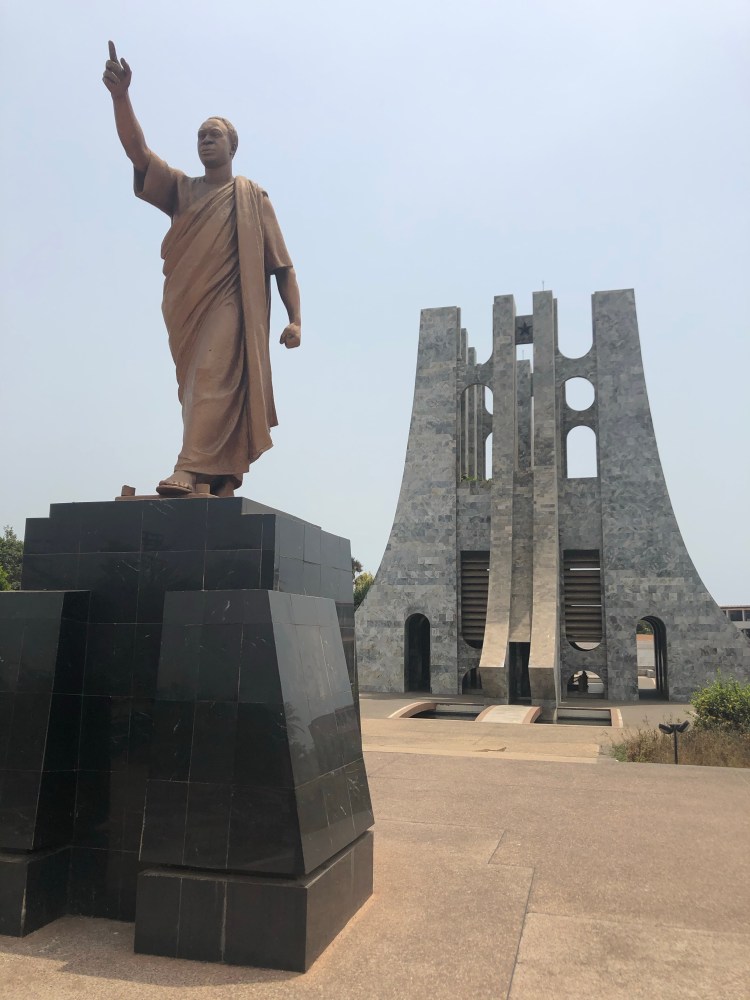
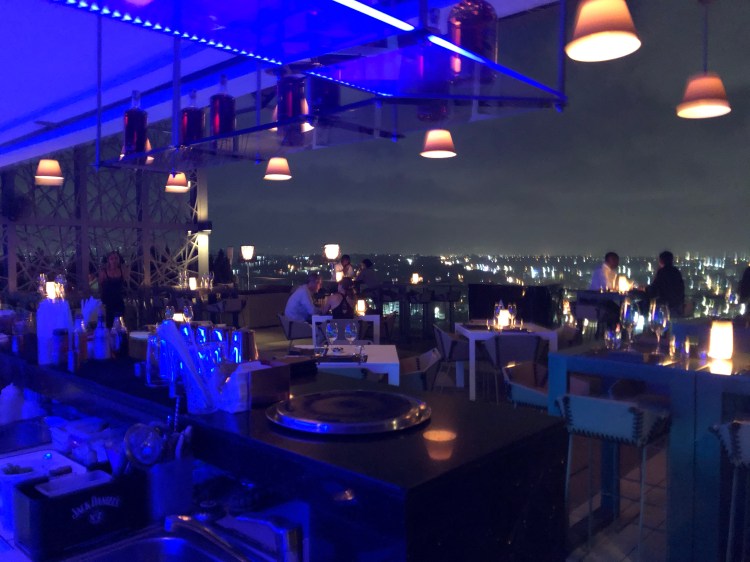
I had the opportunity the last week of February to travel to Accra, Ghana to assist with Paystack’s international expansion work. I tagged along with my coworker, who had setup meetings with all the major players in the payments ecosystem: developers, startup founders, eCommerce companies, and the biggest Telecom company in the country. It was quite a privilege to be meet so many amazing people who were very generous with their time.
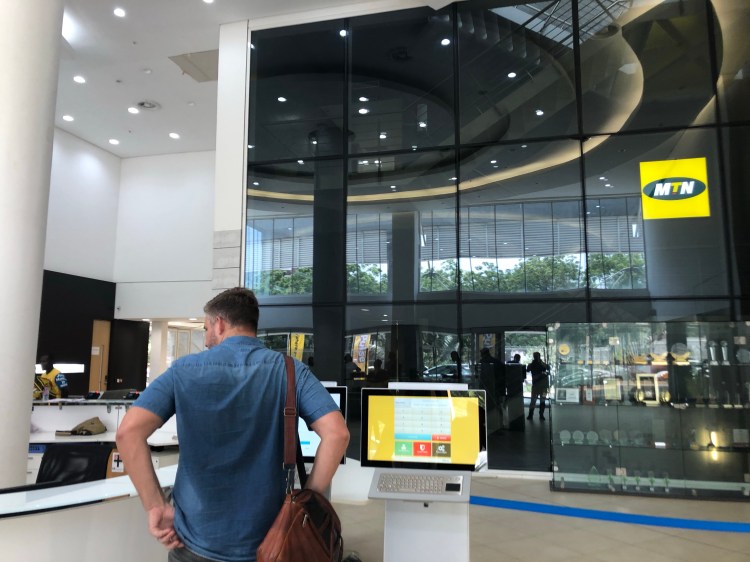
One of my favorite conversations was with a founder who gave up a position with NASA in the US to return to Ghana and start a company that processes products from the Moringa tree. He told us his factory had recently burned down and that they had restarted operations by taking his childhood home, gutting the inside, and installing industrial machines inside to keep production going. There were also much to learn about how payments is evolving and how it the Ghana ecosystem is heavily driven by mobile money. If you have more questions and want to learn about mobile money, please let me know. Otherwise, I’m going to skip it in favor of…
The Cape Coast Castle trip
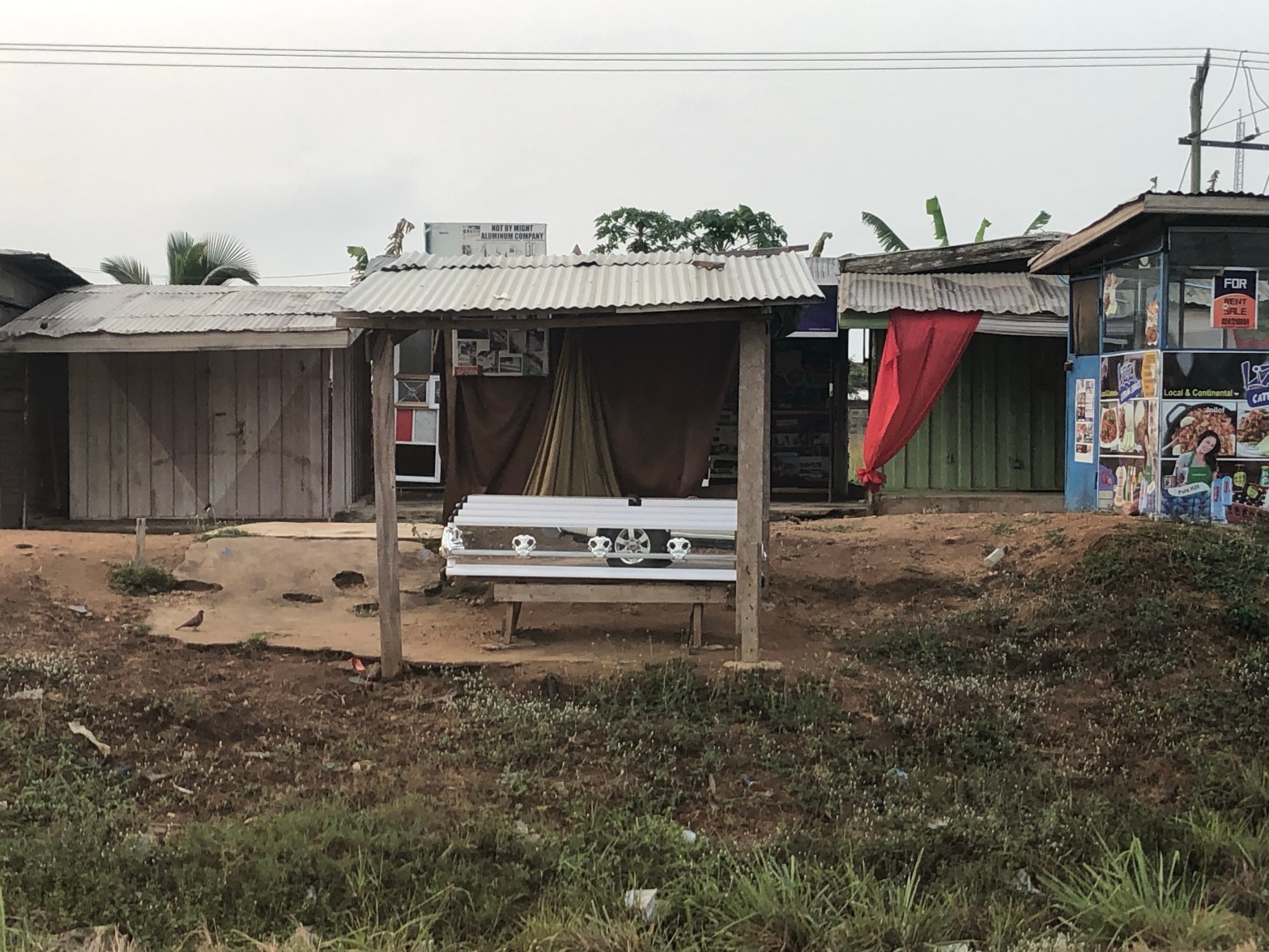
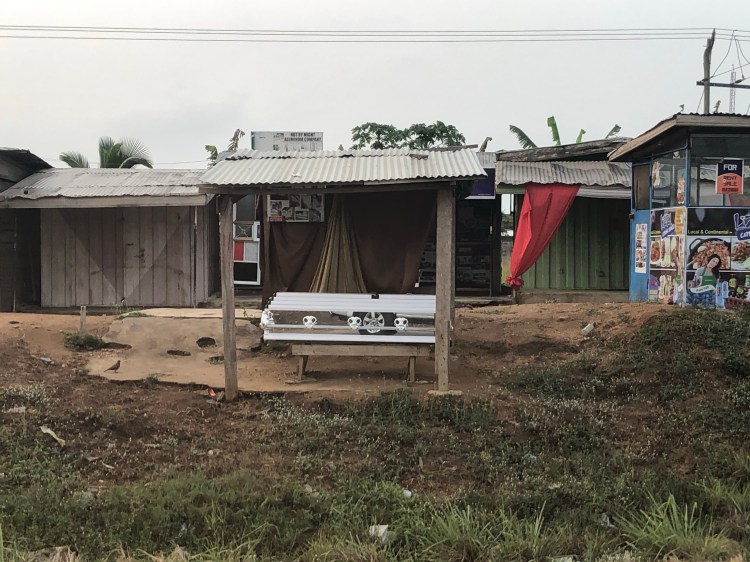
The highlight of the entire trip was on Saturday. 2 guys we had met were incredibly hospitable and drove us 3 hours EACH WAY to see the Cape Coast Castle. On our way there, we were stuck in long lines of traffic. When we asked where everybody was going, they replied “to funerals.” Apparently in Ghana, funerals constitute a major part of the social scene and many people schedule them on Saturdays. These funerals are celebratory send-offs for people after they have passed away and are filled with music, food, alcohol, and festivities. Coming from Nigeria, I was very surprised as Saturdays are generally reserved for weddings. However in Ghana, funerals seemed to take precedent as a way to send somebody off in style. We learned that coffins can even be constructed to resemble the person: a fisherman could be buried in a box shaped like a fish or somebody who liked to drink might be buried in a beer bottle.
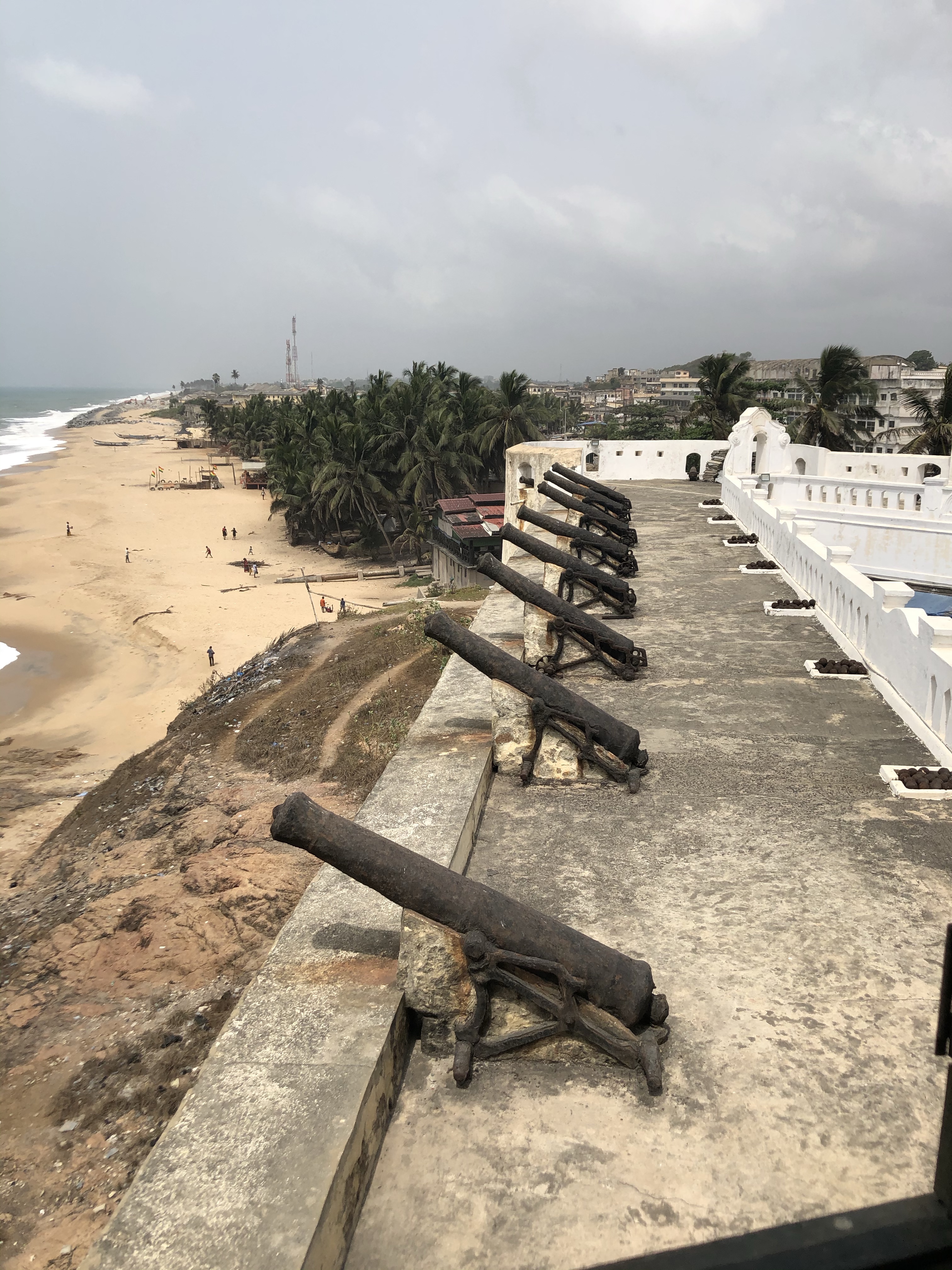
But back to Cape Coast. The castle is infamous for having been one of three castles through which slaves were shipped from West Africa across the Atlantic as part of the “Triangular Trade.” From what I had learned in grade school, the triangular trade was the trifecta of slaves from West Africa, harvested sugar cane in the Caribbean, and rum in New England/Europe, which was then shipped along with other goods back to Africa for a viciously profitable cycle. When you take it in perspective, the transatlantic slave trade was estimated to have operated for over 300 years, that’s longer than the USA has existed as a country!
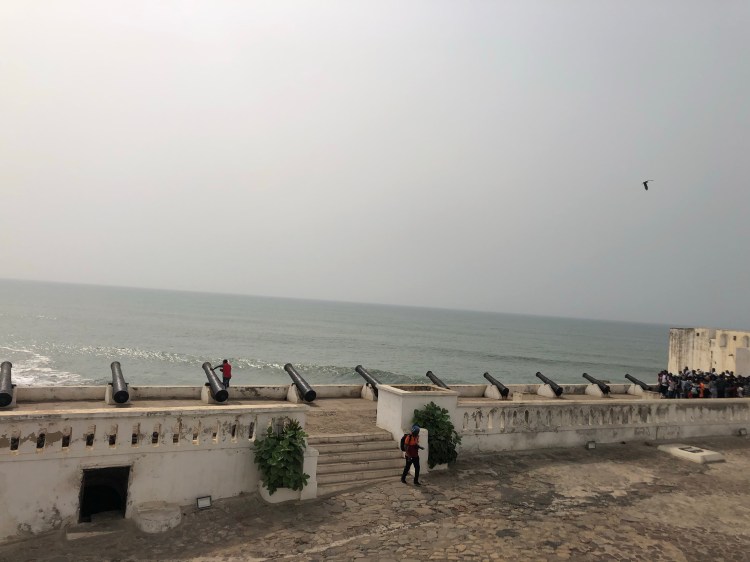
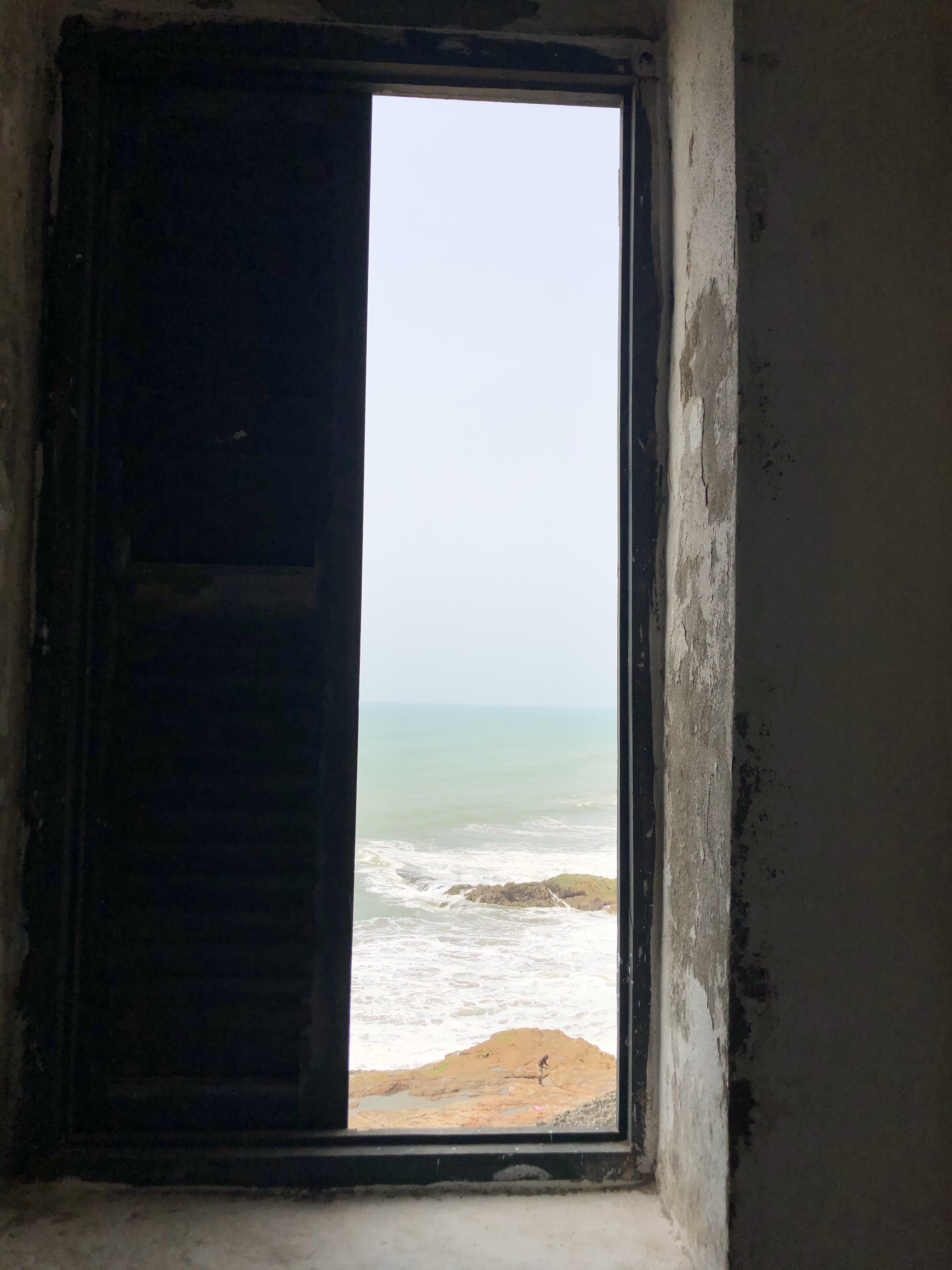
View from Cape Coast Castle 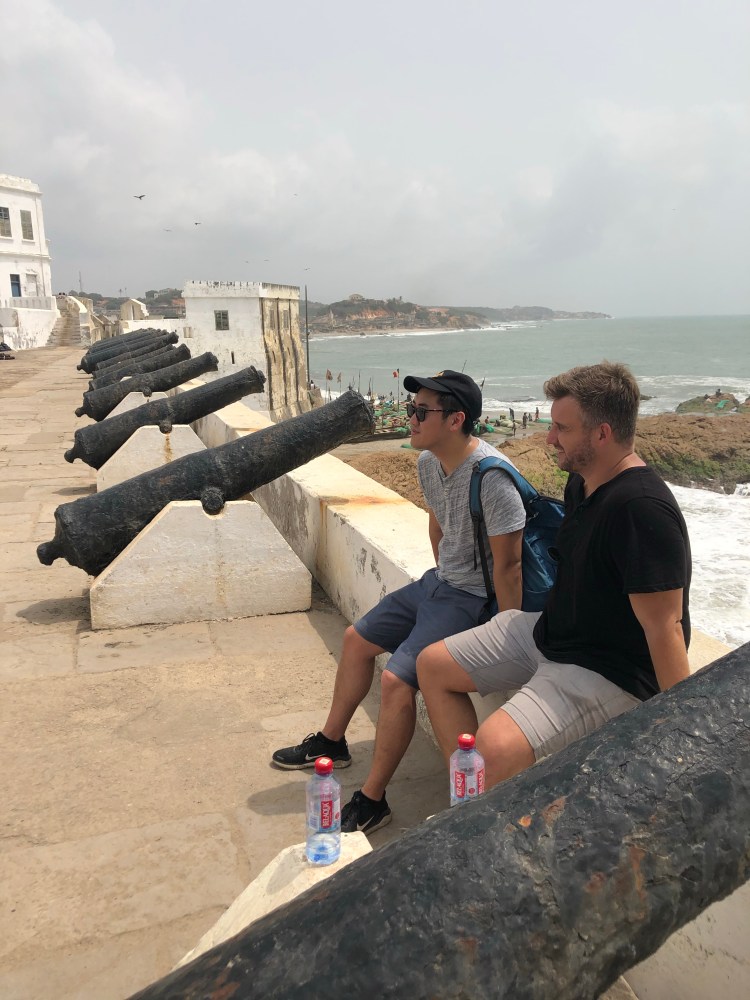
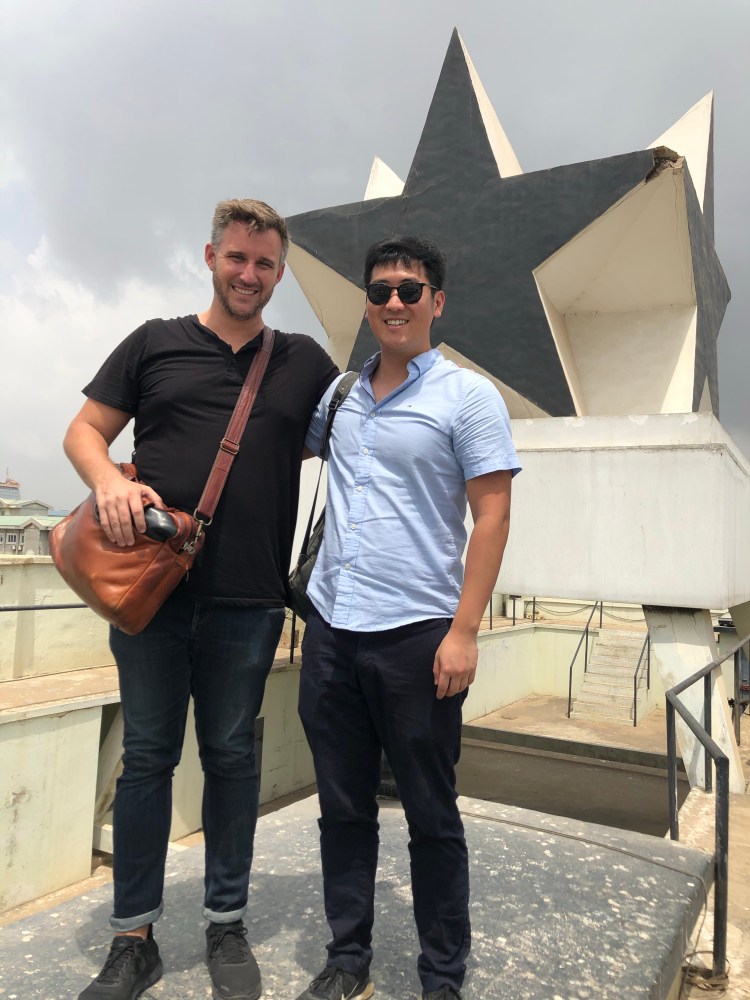
Me and my coworker Joel in deep thought after the tour
(trigger warning – the content below details some of the graphic experiences of slaves)
In short, the castle and tour was well worth the 6+ hours of driving. Once we arrived, we were first taken into the male slave dungeon. The dungeons were quite dark and thankfully cooler than the harsh sunlight outside. But as the tour guide began talking, he pointed how the floor in the current room was made of brick, yet the floor in the other rooms of the dungeon were smooth. The reason why: the current room had been excavated. The residue of human bodies, blood, dirt, and feces for over 300 years had solidified over the original bricks and constituted the floor that we were standing on.
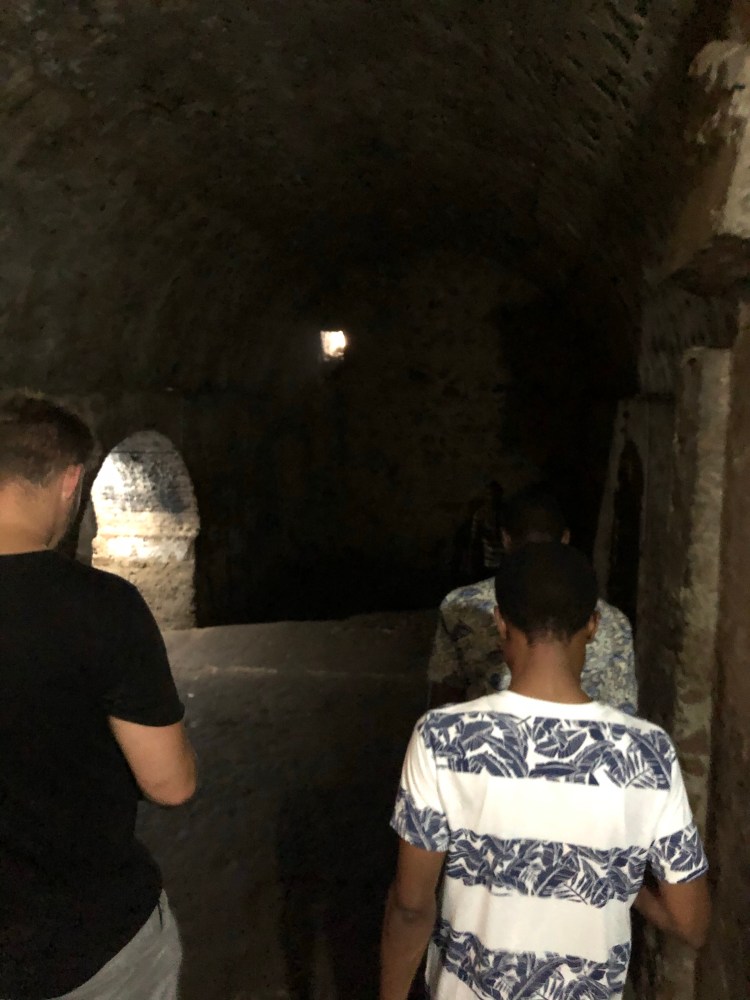
Entering the male slave dungeons 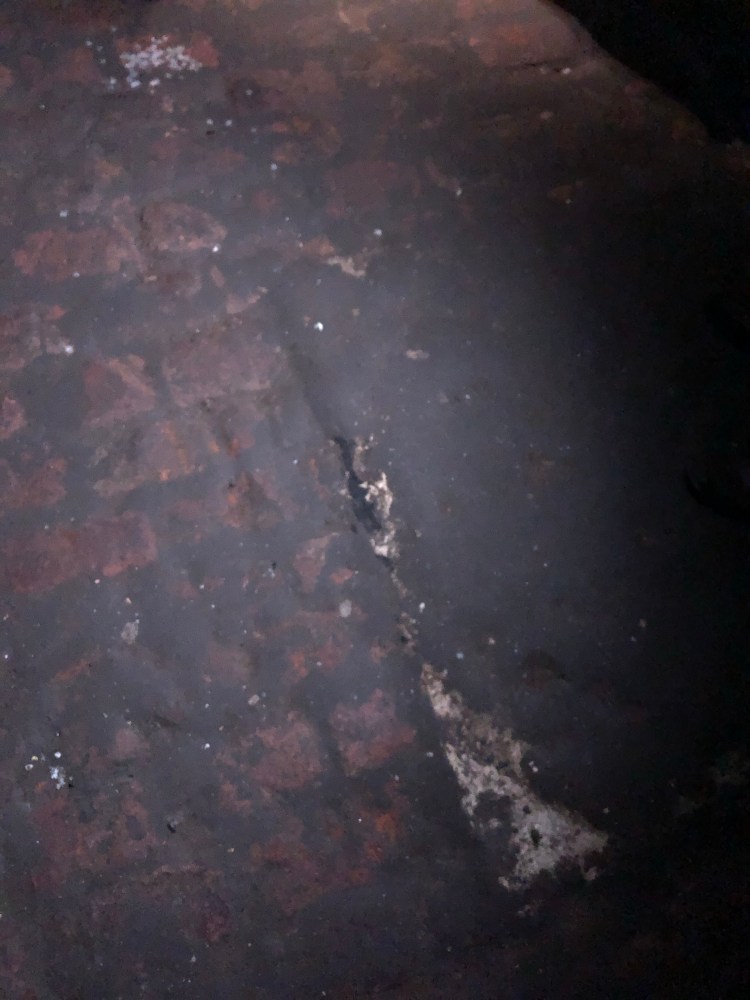
The excavated brick juxtaposed with the 300 years of human residue 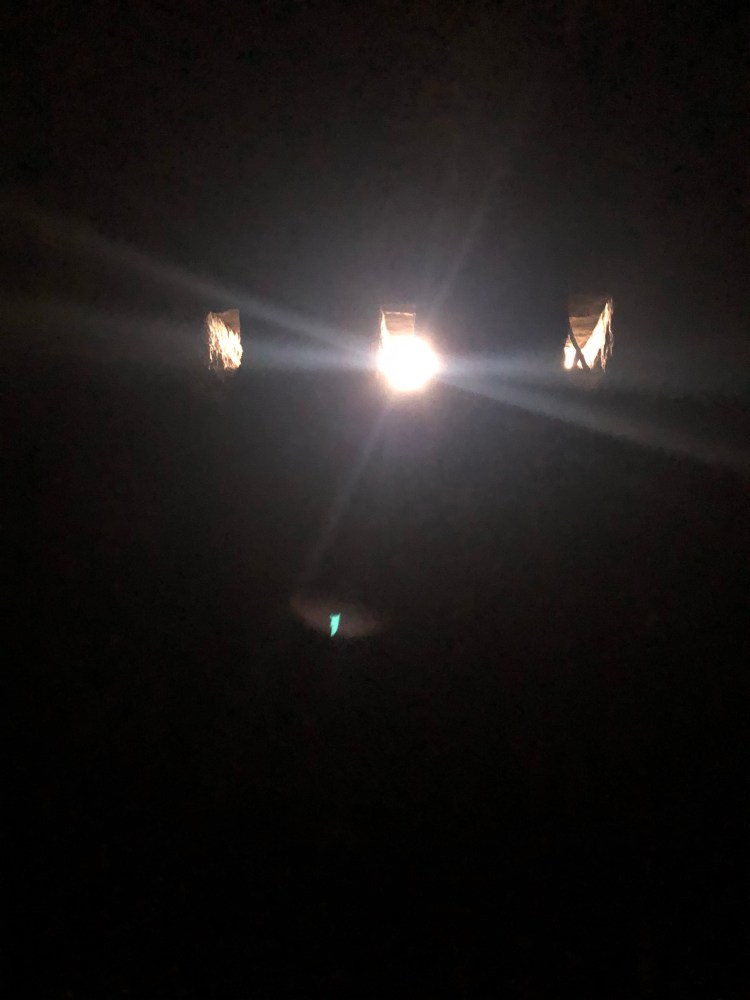
3 windows of light allowed into the dungeon
The next room we were taken to was a smaller dungeon. The tour guide told us that this was the room where male slaves who were rebellious and tried to escape were taken 15-25 people at a time. Then, they were literally left to die and their bodies were thrown into the ocean. The guide turned off the light and we stood in silence for less than a minute. It felt like an eternity, I could hardly bear to be in the hot and cramped cell. It must have been a living nightmare being left for weeks in there to die.
After leaving the men’s isolation cell, we viewed the women’s isolation cell. In this room, women slaves were kept if they resisted advances by the guards. In their case, they were not left to die, but instead were kept in that cell until their spirits broke and they would no longer resist the soldiers raping them.
At the far end of the castle was the “Door of No Return” through which slaves would be taken out to be loaded onto ships across the Atlantic never to return.
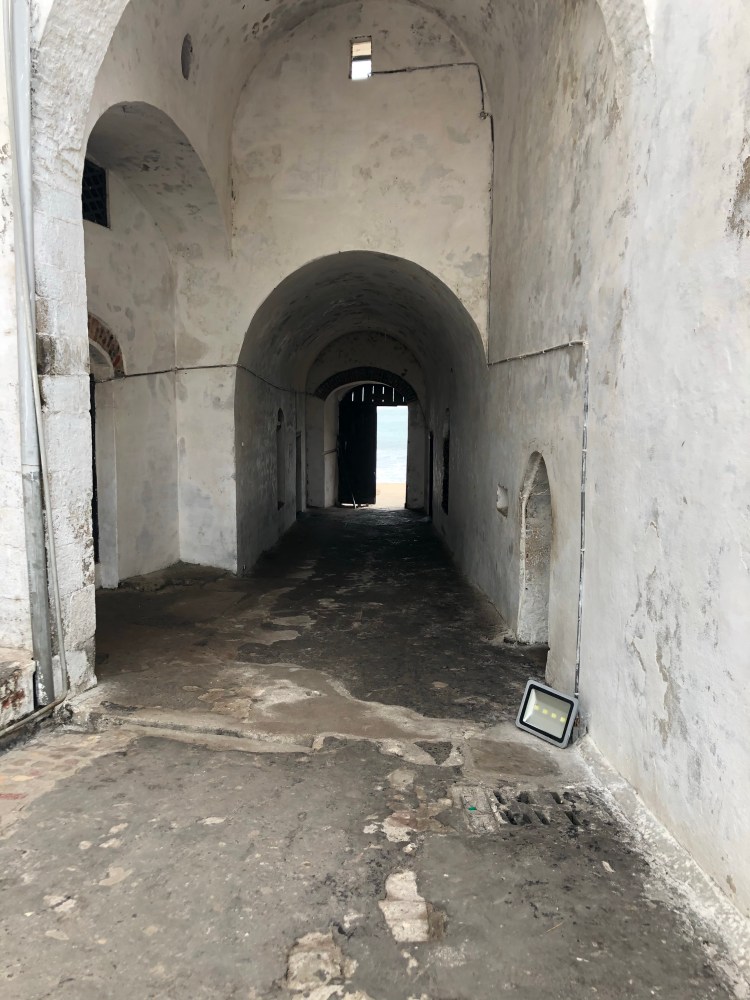
Our tour group was then taken up the stairs to the governor’s quarters which were quite elevated and had many windows. The cross breeze in the governor’s quarters felt quite cool and it was a completely different world from the dungeons less than 100 steps away. The tour guide specifically pointed out the juxtaposition of how well the governor’s quarters felt in comparison to the hot and cramped slave experience.
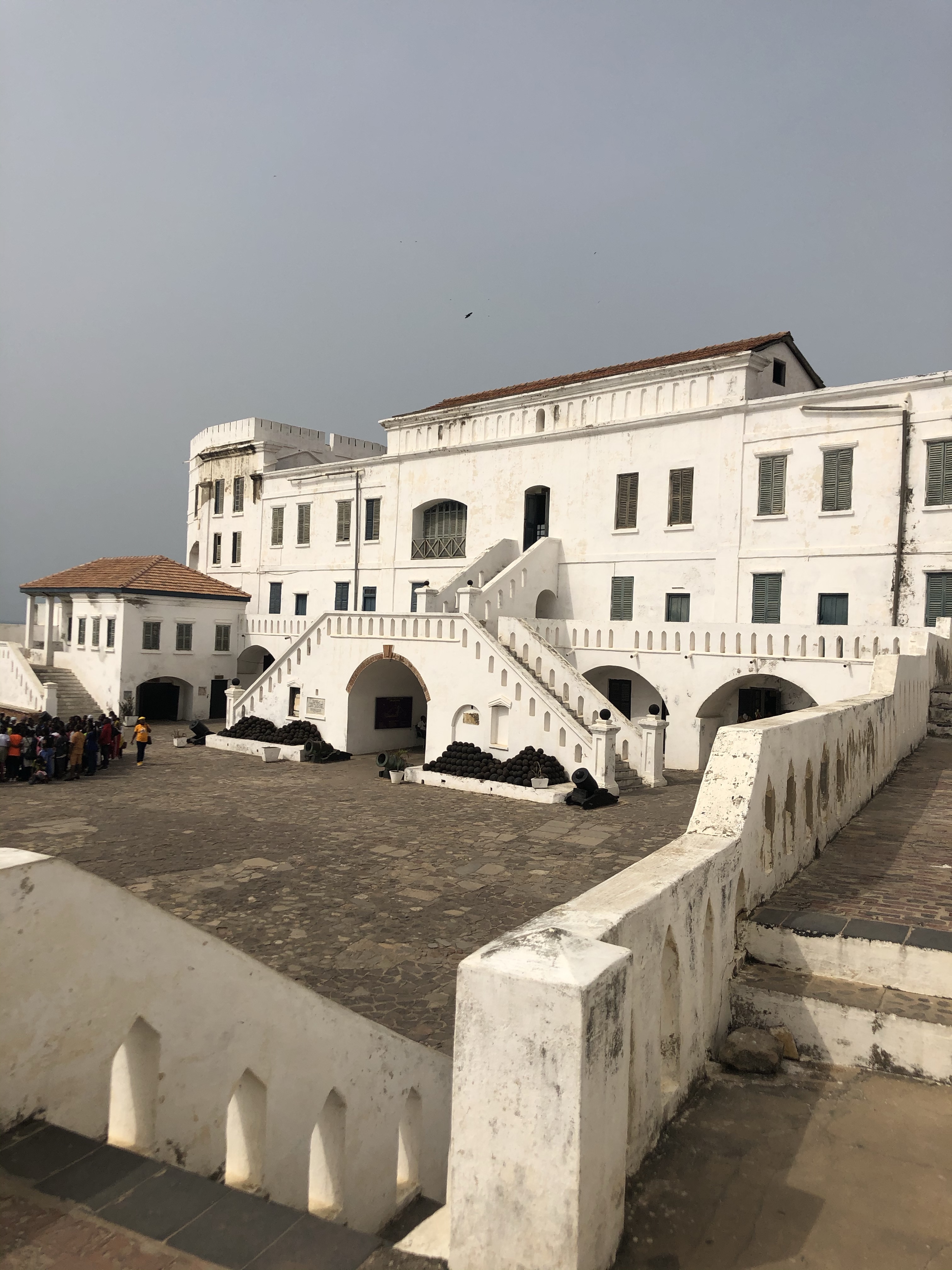
Our last stop on the tour was the church that was built directly on top of the slave dungeon. From this church, people would worship God, and then right outside the door of the church was a lookout hole from which people could check in on their slaves below. The image of people going to church, preaching values of love and freedom and righteousness above enslaved Africans was so hypocritical that I still have a hard time reconciling the ideas in my head.
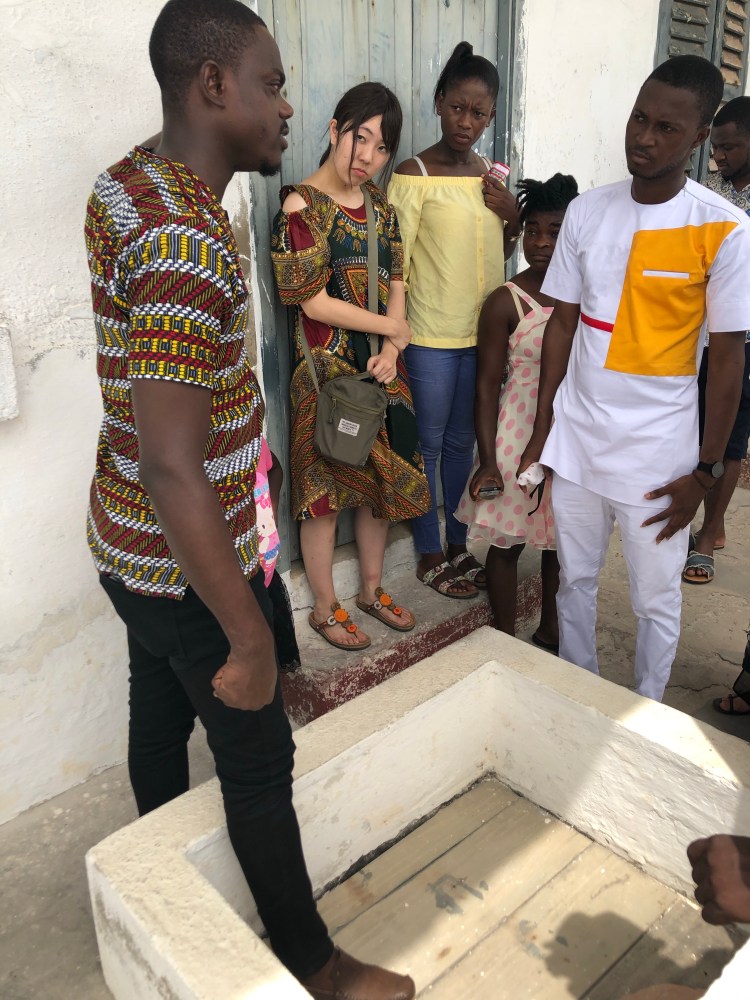
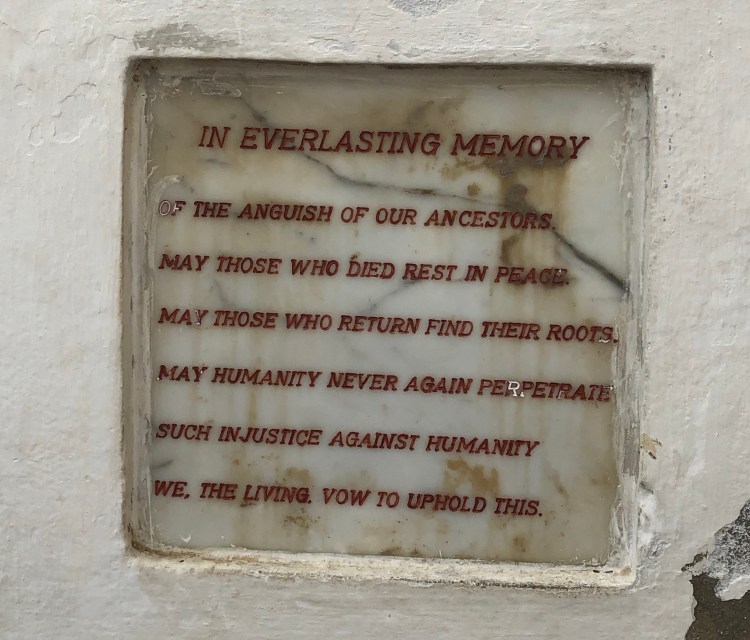
The whole experience left quite an impression on me. As an American, I briefly remember time that I spent in my early education covering the history of how slaves came to America. But it never occurred to naive 12-year old self that I would someday visit the place where people lost their freedom and see where the dark mark of slavery on American history began.
Our tour guide finished with the speech that slavery continues to exist to this day in the form of sex trafficking, forced labor, child slavery, and more.* But Cape Coast Castle represents more than just the experience of slaves from West Africa: it stands as a lesson that we must not forget the injustices and hypocrisies of the past and stand for the freedom of all people.
Follow My Blog
Get new content delivered directly to your inbox.
Appendix
*I’ve been reminded of current human rights violations in the US going on right now. What is the difference between locking up slaves in West Africa with locking up South American immigrants in detention centers? 300 years and a presidential endorsement.
 Spencer in Lagos